Traditional Rwandan Crafts
Traditional Rwandan crafts reflect the creativity, history, and cultural identity of Rwanda. Deeply rooted in everyday life, these handmade arts combine functionality with symbolism, passing stories, values, and skills from one generation to the next.
What Makes Rwandan Crafts Unique
Rwandan crafts are shaped by community traditions and natural materials sourced from the surrounding environment. Artisans work with grasses, reeds, clay, wood, and beads to create items used in homes, ceremonies, and trade. Every craft carries meaning, often representing unity, fertility, peace, and resilience.
Craft-making is not only an artistic expression but also a vital source of income for many rural and community cooperatives.
Agaseke – Rwanda’s Iconic Peace Basket
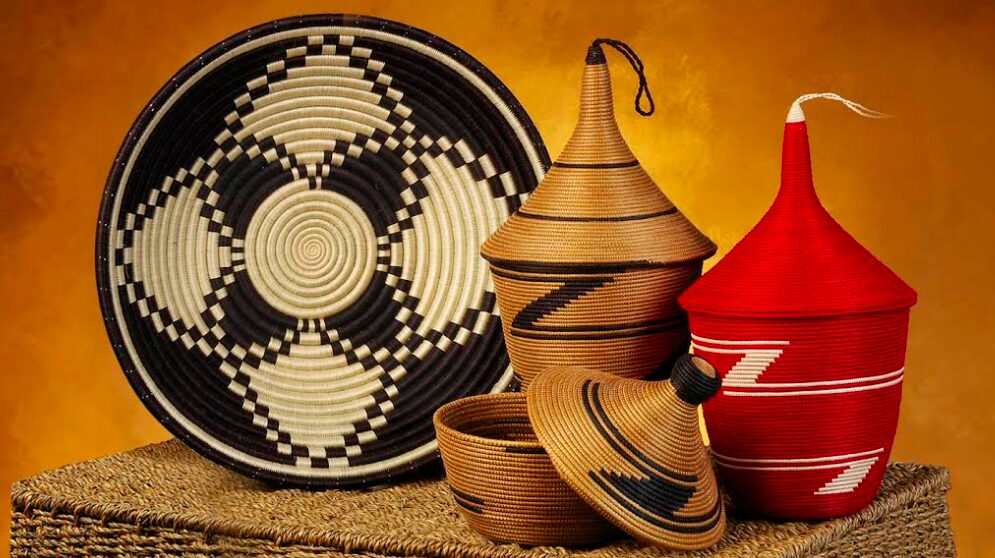
The most famous Rwandan craft is the agaseke basket. Traditionally used to store valuables and gifts, the agaseke symbolizes peace, hospitality, and reconciliation. Its tight weave and distinctive lid reflect skill and patience, while the colors and patterns often carry personal or regional meaning.
Today, agaseke baskets are widely sold as cultural souvenirs and are recognized internationally as a symbol of Rwanda.
Basket Weaving and Fiber Crafts
Beyond agaseke, basket weaving remains central to Rwandan craft traditions. Artisans create mats, trays, storage baskets, and decorative pieces using sisal, papyrus, and banana fibers. These items serve practical household purposes while also showcasing artistic detail.
Weaving cooperatives, many led by women, play a key role in preserving techniques and supporting community livelihoods.
Pottery and Clay Work
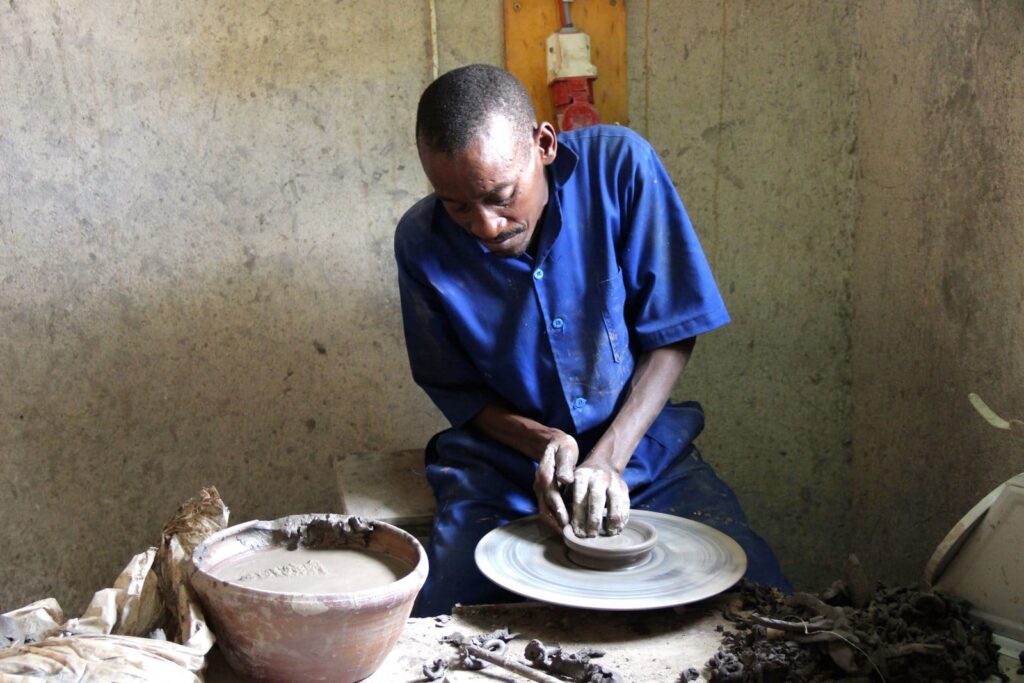
Traditional pottery is practiced in several regions of Rwanda. Clay pots are used for cooking, water storage, and ceremonial purposes. Pottery designs tend to be simple yet functional, shaped by hand and fired using traditional methods.
Pottery workshops often form part of rural village visits, where visitors can observe or try shaping clay under the guidance of local artisans.
Wood Carving and Functional Art
Wood carving produces stools, utensils, drums, and decorative objects. Craftsmen carve wood into everyday items that reflect Rwanda’s practical design traditions. Drums hold special cultural significance, often used in ceremonies, dance, and storytelling.
Carved items blend utility with symbolism, reinforcing the connection between art and daily life.
Beadwork and Decorative Crafts
Beadwork adds color and identity to Rwandan crafts. Beads are used to decorate jewelry, garments, ceremonial items, and household objects. Patterns and colors often indicate status, region, or occasion.
Beadwork complements dance costumes and cultural performances, enhancing visual storytelling through design.
Crafts Around National Parks and Communities
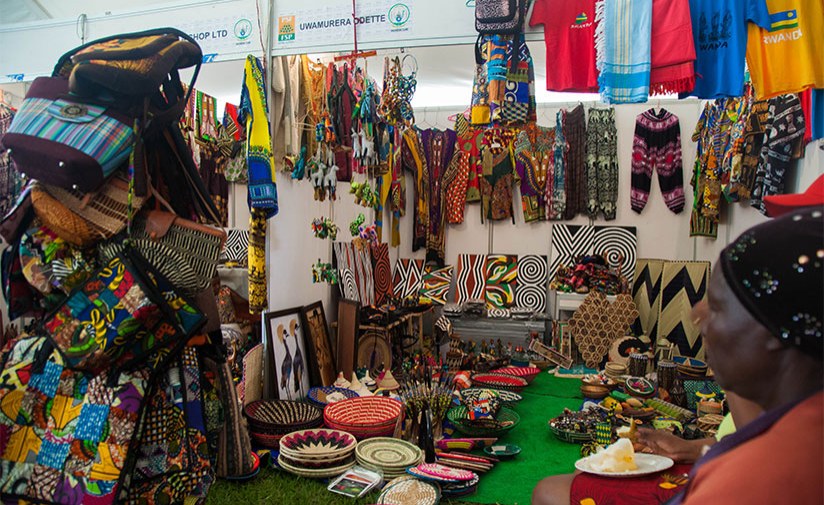
Traditional crafts are closely linked to community tourism. Around Volcanoes National Park, Nyungwe Forest National Park, and Akagera National Park, cooperatives sell handmade items to visitors.
Tourism revenue supports conservation-friendly livelihoods, reducing pressure on natural resources while celebrating cultural heritage.
Craft Markets and Cooperatives
Local markets and cooperatives are the best places to explore traditional Rwandan crafts. Artisans often work on-site, allowing visitors to see the creation process and learn about the meaning behind each piece.
Purchasing crafts directly from cooperatives ensures fair compensation and supports sustainable community development.
Who Traditional Rwandan Crafts Appeal To
Rwandan crafts appeal to travelers interested in culture, responsible shopping, interior design, and meaningful souvenirs. They also attract photographers, educators, and visitors seeking deeper connection with local traditions.
Final Insight
Traditional Rwandan crafts embody the country’s spirit of creativity, resilience, and unity. Through baskets, pottery, woodwork, and beadwork, Rwanda tells its story by hand—offering visitors not just objects, but symbols of culture, community, and continuity.