Nyungwe Forest Primate Species Guide
Nyungwe Forest National Park is Rwanda’s richest primate habitat and one of the most biologically diverse rainforests in Africa. Home to an exceptional concentration of primate species, the forest offers far more than chimpanzee trekking alone. Each primate species occupies a unique ecological niche, contributing to the balance and resilience of this ancient ecosystem.
For travelers interested in wildlife diversity, Nyungwe provides a rare opportunity to encounter multiple primates within a single protected area. Understanding the primate species found here adds depth to every hike, canopy walk, and forest encounter.
Why Nyungwe Is a Primate Stronghold
Nyungwe Forest’s age, altitude, and continuous canopy create ideal conditions for primate survival. The forest has remained largely intact for thousands of years, allowing primate populations to evolve and coexist in stable conditions.
High rainfall, diverse vegetation, and layered forest structure support feeding, nesting, and movement for different species. This complexity explains why Nyungwe hosts more primate species than any other national park in Rwanda.
Chimpanzees of Nyungwe Forest
Chimpanzees are the most well-known primates in Nyungwe Forest. They live in large, complex communities and range widely through the forest in search of food. Their intelligence, vocal communication, and social behavior make them fascinating to observe.
Chimpanzees spend much of their time in the forest canopy, though they also move on the ground. Their presence influences forest dynamics through seed dispersal and hunting behavior, playing a vital ecological role.
Black-and-White Colobus Monkeys
The black-and-white colobus monkey is one of Nyungwe’s most visible and iconic species. These monkeys are known for their striking black fur contrasted with long white mantles and tails. They often move in large groups, sometimes numbering over a hundred individuals.
Colobus monkeys are leaf-eaters and spend most of their time in the canopy. Their group movement through treetops creates dramatic visual scenes and audible rustling, making them easy to spot during forest walks and canopy experiences.
L’Hoest’s Monkeys
L’Hoest’s monkeys are among Nyungwe’s more elusive primates. They prefer dense undergrowth and forest edges, making sightings less predictable. These monkeys have dark fur and distinctive white beards, giving them a serious, alert appearance.
They are primarily ground-dwelling compared to other species, foraging quietly in shaded areas. Spotting L’Hoest’s monkeys often feels rewarding due to their cautious nature and limited visibility.
Blue Monkeys
Blue monkeys are smaller, agile primates commonly found in Nyungwe Forest. Despite their name, their coloration ranges from grey to olive with lighter underparts. They are active, quick-moving, and often seen leaping between branches.
These monkeys feed on fruits, leaves, and insects, adapting easily to different forest levels. Their adaptability contributes to their widespread presence across the park.
Red-Tailed Monkeys
Red-tailed monkeys are named for the distinctive reddish fur on their tails. They are curious, expressive primates that often move in mixed-species groups with blue monkeys.
Their social behavior and alert nature make them engaging to watch. They communicate frequently and react quickly to sounds, offering lively forest encounters for observant visitors.
Grey-Cheeked Mangabeys
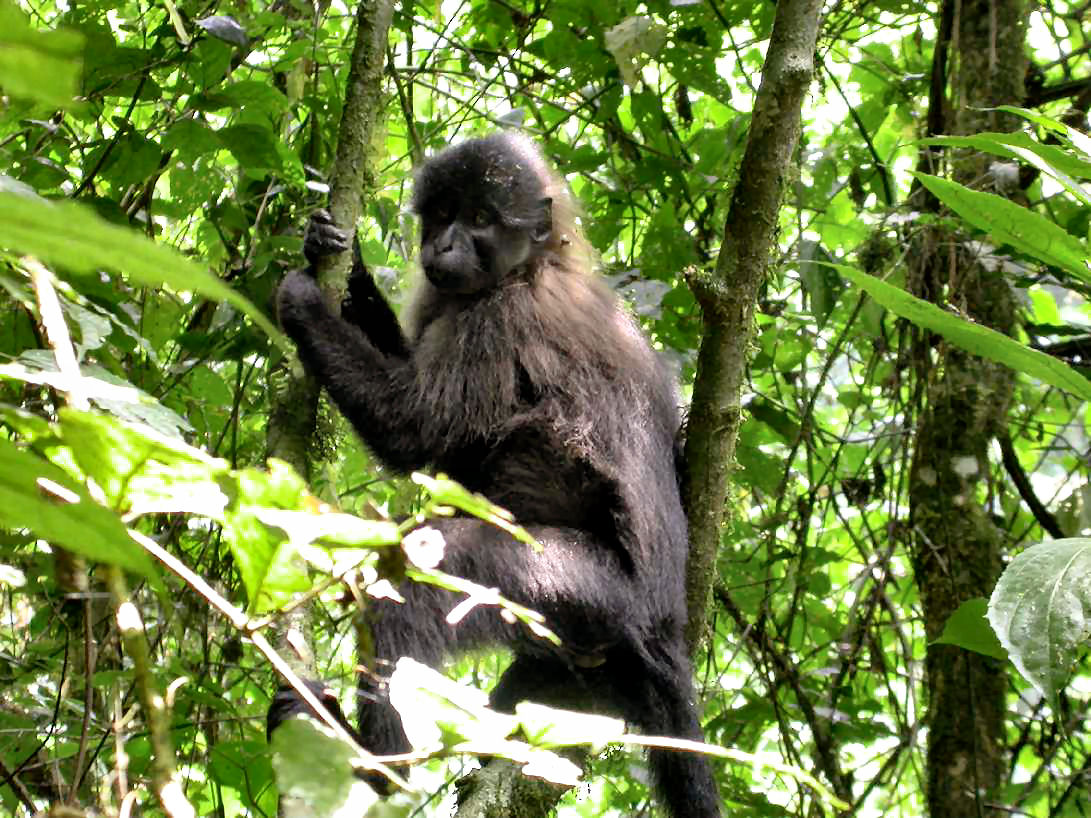 Grey-cheeked mangabeys are powerful, medium-sized primates known for their deep calls and strong jaws. They move confidently through both canopy and ground layers, feeding on fruits and seeds.
Their vocalizations often echo through the forest before they are seen. Observing mangabeys offers insight into primate communication and dominance behavior within Nyungwe’s ecosystem.
Olive Baboons
Olive baboons inhabit forest edges and transitional zones near Nyungwe. They are highly adaptable and often forage in open areas near park boundaries.
Baboons are social and intelligent, living in structured troops with clear hierarchies. While not forest specialists like other primates, they play an important role in ecosystem dynamics.
Vervet Monkeys
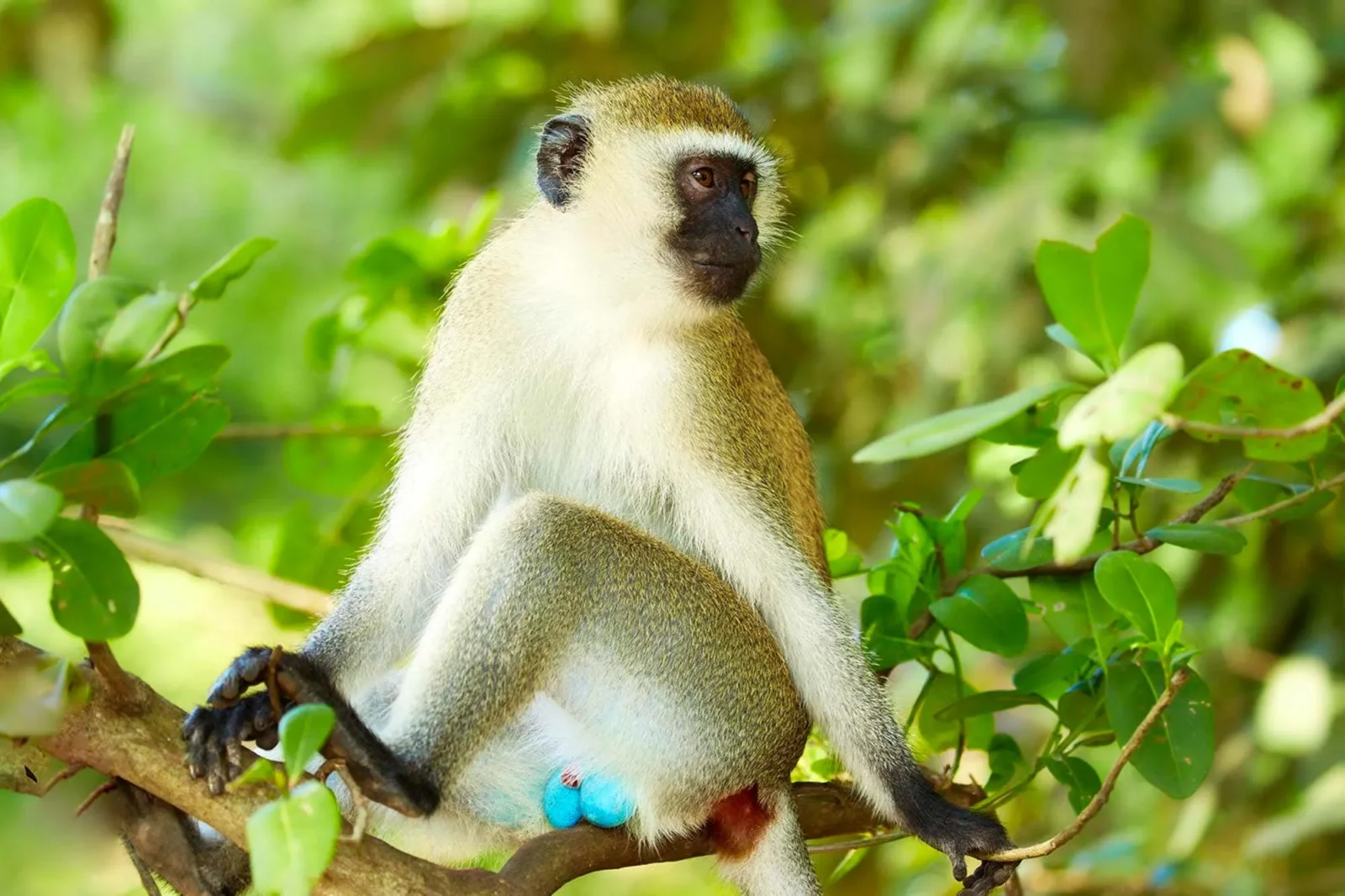 Vervet monkeys are smaller and highly adaptable primates found in parts of Nyungwe and surrounding areas. Their alert behavior and vocal alarms make them effective early-warning species within mixed habitats.
They often stay near forest edges and open clearings. Their presence reflects habitat diversity rather than deep forest specialization.
Mixed-Species Associations
One of Nyungwe’s most fascinating features is the occurrence of mixed-species primate groups. Different monkey species often travel together for protection and foraging efficiency.
These associations increase detection of predators and enhance survival. Observing mixed groups offers a deeper understanding of primate cooperation and ecosystem complexity.
Primate Observation Opportunities in Nyungwe
Primate sightings in Nyungwe occur during forest walks, chimpanzee treks, and canopy walks. While chimpanzees require specific permits, other primates can be observed during guided hikes.
Early mornings offer the best chances for activity and vocalizations. Patience and attentiveness significantly increase observation success.
Conservation Importance of Primate Diversity
Nyungwe’s primate diversity reflects a healthy, functioning ecosystem. Each species contributes to seed dispersal, forest regeneration, and ecological balance.
Protecting this diversity safeguards the forest itself. Tourism revenue supports conservation programs that ensure long-term survival of these primates and their habitat.
Who This Experience Is Best For
Nyungwe’s primate diversity appeals to nature enthusiasts, wildlife photographers, and travelers interested in biodiversity rather than single-species encounters.
Those seeking variety and ecological depth often find Nyungwe deeply rewarding. The forest offers discovery rather than spectacle, favoring observation and understanding.
Plan Your Safari
Nyungwe Forest’s primate species showcase Rwanda’s incredible biodiversity beyond gorillas. From chimpanzees to colobus monkeys, each species adds a layer of richness to the forest experience. With thoughtful exploration and guided interpretation, visitors gain a deeper appreciation for one of Africa’s most important primate strongholds.