Lake Kivu Photography Guide: Capturing Rwanda’s Most Serene Landscapes
Lake Kivu offers one of the most rewarding photography environments in East Africa. The lake combines calm water, layered hills, human activity, and shifting light in a way that constantly changes but never overwhelms. Photography here rewards patience rather than speed. Scenes unfold slowly, inviting careful framing and thoughtful timing.
Stretching along Rwanda’s western border, Lake Kivu flows past the lakeside towns of Gisenyi, Karongi, and Rusizi. Each area offers a distinct photographic mood, shaped by geography, light direction, and human presence.

Understanding Light on Lake Kivu
Light defines photography on Lake Kivu more than any other element. Early mornings bring soft, diffused light as mist lifts gently from the water. This time suits wide landscape compositions, reflections, and minimalistic scenes. The lake often appears mirror-like at dawn, allowing photographers to capture symmetry and calm.
Midday light feels stronger but remains usable due to the lake’s altitude and reflective surface. Photographers often shift focus during this period, working on details such as fishing nets, shoreline textures, and village life. Late afternoon transitions into golden hour, when hills glow warmly and shadows stretch across the water.
Sunsets on Lake Kivu feel slow and layered. Colors deepen gradually, offering extended shooting windows rather than sudden transitions. Blue hour arrives gently, blending sky and water into smooth gradients.
Best Locations for Lake Kivu Photography
Gisenyi offers a dynamic mix of nature and people. Volcanic shorelines frame the lake, while fishing boats and swimmers add movement and scale. This area works well for storytelling images that combine landscape with daily life.
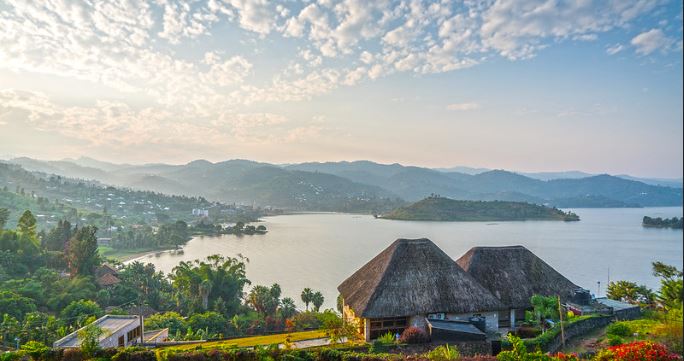
Karongi delivers a quieter, more sculpted environment. Peninsulas and islands create strong leading lines and layered compositions. Photographers often find this region ideal for long exposures, minimalist scenes, and reflection-based images.
Rusizi provides a more natural and less developed backdrop. Wide water channels, forested hills, and traditional fishing villages create opportunities for raw, documentary-style photography. The slower pace allows deeper immersion and stronger narrative work.
Photographing Fishermen and Cultural Life
Fishing culture defines Lake Kivu’s visual identity. Night fishing scenes rank among the lake’s most iconic photographic moments. Lantern lights scattered across dark water form patterns that feel almost celestial. These scenes require steady hands and careful exposure control, but the results feel timeless.
Morning hours reveal fishermen returning with their catch, nets heavy and boats gliding quietly to shore. Respect remains essential. Photographers should seek permission, maintain distance, and observe before shooting. Genuine moments emerge when photographers blend into the rhythm rather than interrupt it.
Village life along the shore offers subtle storytelling. Women sorting fish, children playing near boats, and quiet conversations under trees all form part of the lake’s visual narrative.
Landscape and Nature Photography on the Lake
Lake Kivu landscapes feel layered rather than dramatic. Rolling hills fade into the distance, creating natural depth. Photographers often use foreground elements such as rocks, trees, or boats to anchor wide shots.
Weather enhances the experience. Cloud movement adds texture, while light rain softens colors and reflections. Even overcast days produce balanced exposures and moody scenes that feel intimate rather than dull.
Birdlife also adds interest. Kingfishers, fish eagles, and herons frequently appear along the shore, offering opportunities for wildlife photography without leaving lakeside areas.
Water-Based Photography Perspectives
Photographing from the water transforms perspective. Kayaking or boat-based shooting allows photographers to work close to reflections, low angles, and shoreline curves. Calm conditions make handheld shooting easier, especially during early mornings.
Reflections remain a key feature. Still water doubles hills, boats, and skies, creating natural symmetry. Photographers who slow down and wait for complete calm often capture the lake’s most powerful images.
Best Time of Year for Lake Kivu Photography
Photography on Lake Kivu works year-round, but seasonal differences influence mood rather than access. Dry months from June to September and December to February provide clearer skies and stronger contrast. These periods suit classic landscape photography and sunrise work.
Rainy seasons from March to May and October to November bring lush greens, misty mornings, and dramatic skies. These months favor atmospheric photography and storytelling images with emotional depth.
Morning hours remain consistently productive regardless of season, offering calm water and softer light.
Gear and Practical Considerations
A versatile lens range works best on Lake Kivu. Wide-angle lenses capture expansive landscapes and reflections, while short telephoto lenses isolate details and human activity. Tripods help with low-light scenes, especially night fishing and early dawn shots.
Humidity stays moderate, but protective bags and lens cloths help manage condensation during early mornings. Comfortable footwear matters, as shoreline terrain varies between sand, rock, and vegetation.
Responsible Photography on Lake Kivu
Ethical photography strengthens both experience and outcome. Photographers should respect privacy, avoid intrusive behavior, and support local guides when accessing communities. Images captured with patience and respect often carry deeper meaning and authenticity.
Lake Kivu rewards those who observe first and shoot second. The lake does not demand attention. It reveals itself slowly, through light, movement, and quiet moments.
A Lake That Teaches Stillness Through the Lens
Lake Kivu photography teaches restraint and awareness. It encourages photographers to slow down, to watch light evolve, and to connect with people and place before pressing the shutter. The result is imagery that feels calm, honest, and timeless.
For anyone seeking visual storytelling rooted in serenity rather than spectacle, Lake Kivu stands unmatched.