
Kayaking on Lake Kivu: A Tranquil Adventure Between Rwanda and Congo
Kayaking on Lake Kivu offers one of the most peaceful and immersive water experiences in East Africa. Set along Rwanda’s western frontier, Lake Kivu stretches between rolling green hills, terraced farmlands, and quiet fishing villages. Unlike many African lakes, Lake Kivu remains remarkably calm, free from dangerous wildlife, and ideal for both first-time paddlers and experienced kayakers. This makes kayaking here less about adrenaline and more about connection—with nature, culture, and rhythm of lakeside life.
Lake Kivu lies between Gisenyi, Kibuye, and Cyangugu, offering multiple launch points and routes. Each section of the lake delivers a different character, from volcanic shorelines in the north to forested bays and island clusters in the south.
Why Lake Kivu Is Perfect for Kayaking
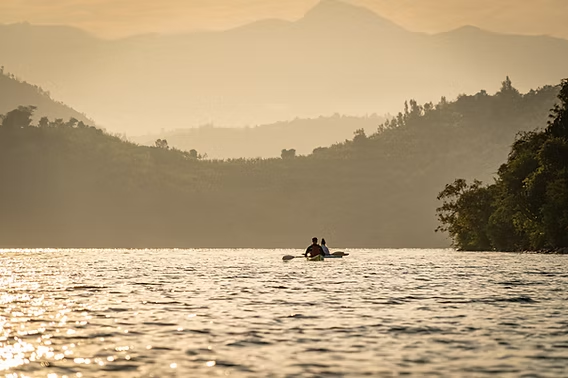
Lake Kivu stands out as one of the safest lakes in Africa for kayaking. The absence of crocodiles and hippos allows paddlers to explore freely without constant vigilance. The lake’s sheltered bays reduce wind exposure, especially during morning hours, when the water often mirrors the sky. This calm environment allows you to paddle at an easy pace while taking in views of mist-covered hills and distant Congolese mountains.
The lake’s geography enhances the experience. Long peninsulas, hidden inlets, and scattered islands create natural routes that suit half-day or multi-day kayaking journeys. The silence on the water feels profound, broken only by birdsong or the rhythmic splash of paddles.
Kayaking Routes and Experiences on Lake Kivu
Kayaking routes on Lake Kivu vary from short scenic paddles to extended expeditions that cover several days. Around Gisenyi, paddling often follows lava-stone shores shaped by ancient volcanic activity from the Virunga range. These routes work well for sunrise or sunset sessions, when the lake glows with soft light and fishermen return with their daily catch.
Further south near Karongi, kayakers explore a maze of islands and peninsulas. This area suits longer paddles, with frequent stops for swimming, photography, or cultural encounters in lakeside communities. In the Rusizi area near Cyangugu, the lake opens into broader channels framed by forested hills, offering a more remote and exploratory feel.
Multi-day kayaking expeditions combine paddling with overnight stays at lakeside lodges or community guesthouses. These journeys allow deeper engagement with the lake’s rhythms, from early-morning departures to evenings spent around the shoreline listening to traditional songs.
Wildlife and Nature While Kayaking
Kayaking on Lake Kivu brings you close to subtle but rewarding wildlife encounters. Birds dominate the scene, with kingfishers darting low over the water, fish eagles calling from treetops, and herons stalking the shallows. Early mornings often reveal otters playing near rocky shores, while butterflies cluster along forested banks.
The surrounding hills support rich plant life, especially in less-developed sections of the lake. Kayaking allows silent movement through these ecosystems, offering a perspective impossible to achieve by motorboat.
Cultural Encounters Along the Shores
One of the most memorable aspects of kayaking on Lake Kivu comes from the human connections along the way. Fishermen paddle traditional wooden boats at dawn, often greeting kayakers with smiles or songs. Children wave from the shore, and small villages invite respectful curiosity.
Guided kayaking experiences frequently include visits to coffee-washing stations, local farms, or island communities. These encounters feel natural and unforced, shaped by slow travel rather than scheduled stops. Kayaking becomes a bridge between visitor and local life, fostering genuine interaction.
Best Time to Kayak on Lake Kivu
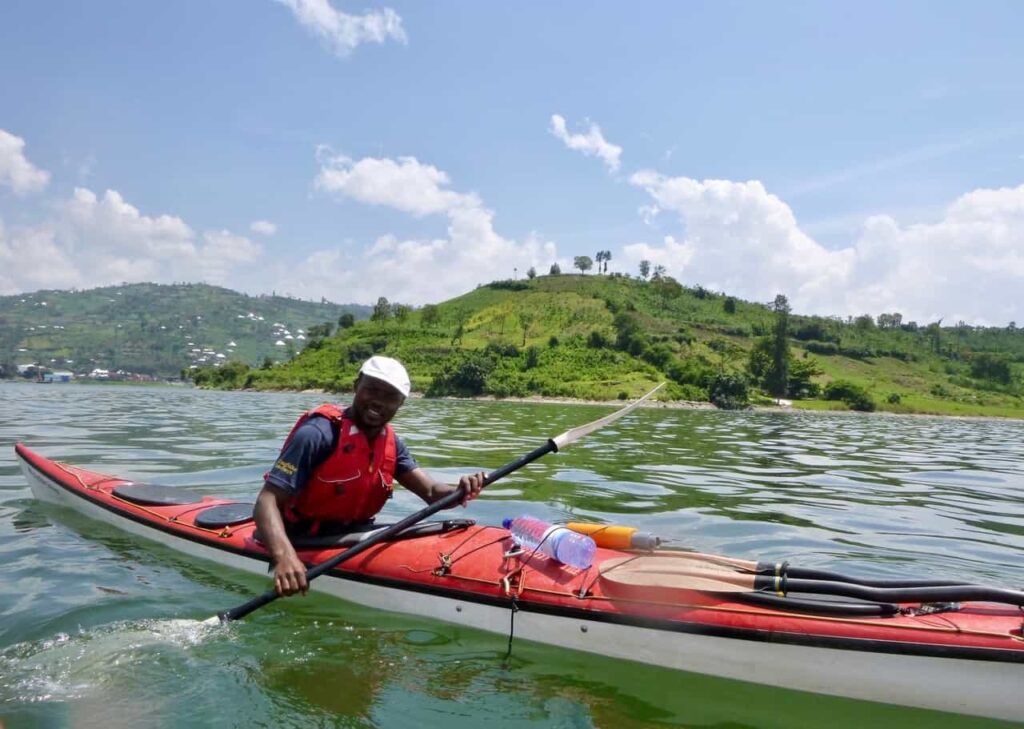
Kayaking remains possible throughout the year, but conditions vary by season. The dry months from June to September and December to February provide the calmest waters and clearest skies. During these periods, early mornings deliver mirror-like surfaces ideal for photography and relaxed paddling.
The wetter months bring lush scenery and dramatic cloud formations. While afternoon winds may increase slightly, guided trips adjust departure times to maintain safety and comfort. Morning kayaking remains excellent even during the rainy season.
Where to Stay for a Kayaking Experience
Lake Kivu offers accommodation options that blend comfort with proximity to kayaking routes. In Gisenyi, lakeside lodges such as Lake Kivu Serena Hotel provide easy access to calm northern waters. Around Karongi, properties like Cormoran Lodge place you directly among island-dotted channels, perfect for extended paddling adventures. Near Cyangugu, smaller eco-lodges and guesthouses support quieter routes and community-based tourism.
Many lodges coordinate kayaking excursions directly, providing equipment, safety briefings, and experienced local guides who understand weather patterns and cultural etiquette.
Responsible Kayaking on Lake Kivu
Kayaking on Lake Kivu aligns naturally with responsible tourism. Paddling leaves no wake, no noise pollution, and minimal environmental impact. Local operators emphasize respect for fishing zones, wildlife habitats, and community privacy.
Visitors support conservation and livelihoods by choosing local guides, staying in community-friendly lodges, and following simple practices such as carrying reusable water bottles and avoiding shoreline litter.
Kayaking as Part of a Rwanda Itinerary
Kayaking on Lake Kivu fits seamlessly into a broader Rwanda journey. Many travelers include it after gorilla trekking in Volcanoes National Park or chimpanzee tracking in Nyungwe Forest. The calm of the lake provides balance after physically demanding forest treks, offering rest without sacrificing adventure.
Whether as a single afternoon paddle or a multi-day expedition, kayaking on Lake Kivu enriches any Rwanda itinerary with depth, serenity, and authenticity.