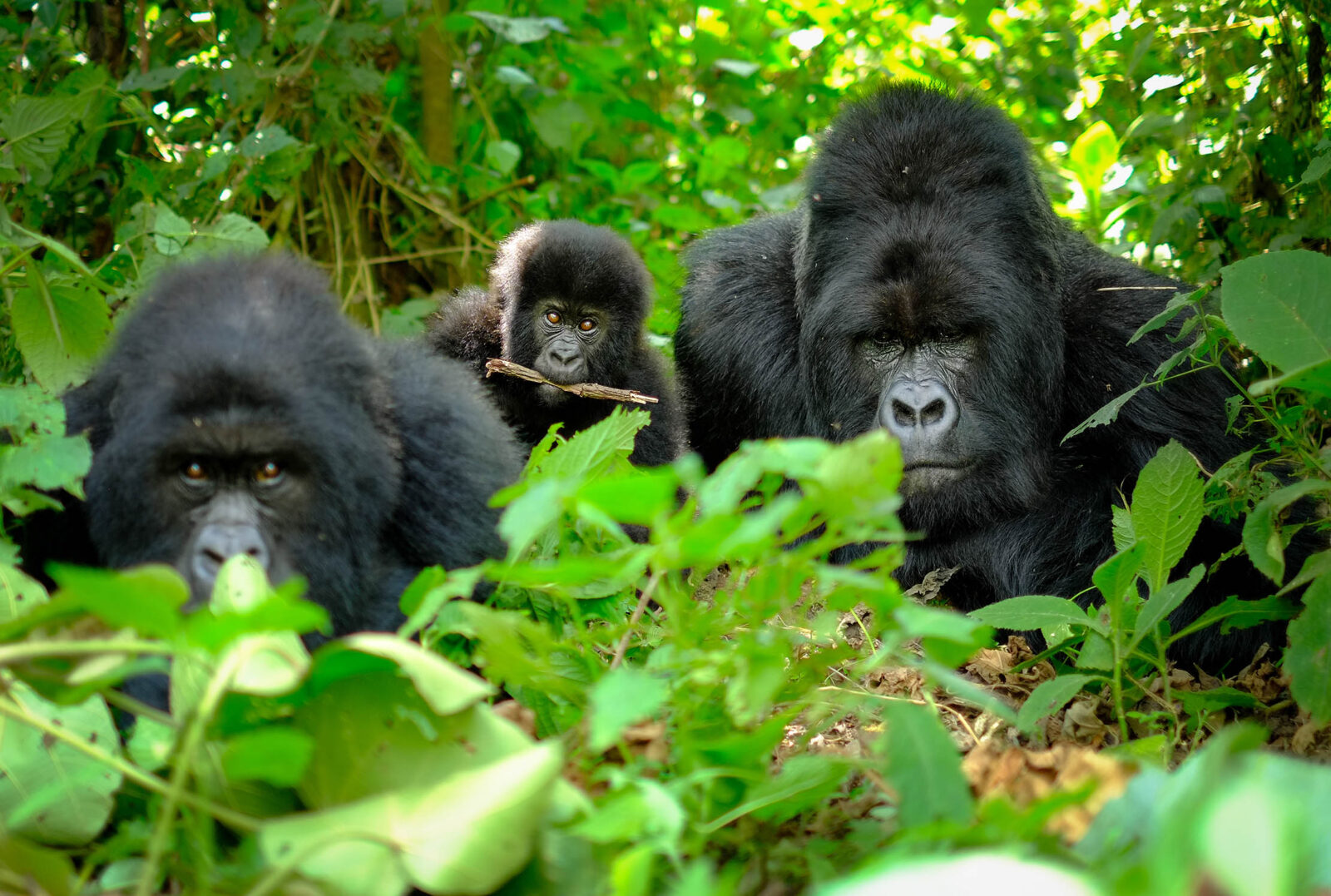
Gorilla Families in Volcanoes National Park
Gorilla families in Volcanoes National Park form the foundation of Rwanda’s gorilla trekking experience. Each trekking encounter revolves around a specific habituated gorilla family, offering visitors a glimpse into the complex social structures, behaviors, and relationships that define mountain gorilla life. Understanding how these families function deepens appreciation for the encounter and adds meaning to every moment spent in the forest.
Volcanoes National Park protects multiple gorilla families, each with its own territory, leadership dynamics, and personality traits. While visitors do not choose families in advance, learning how these groups operate helps travelers understand what they are witnessing during the trek.
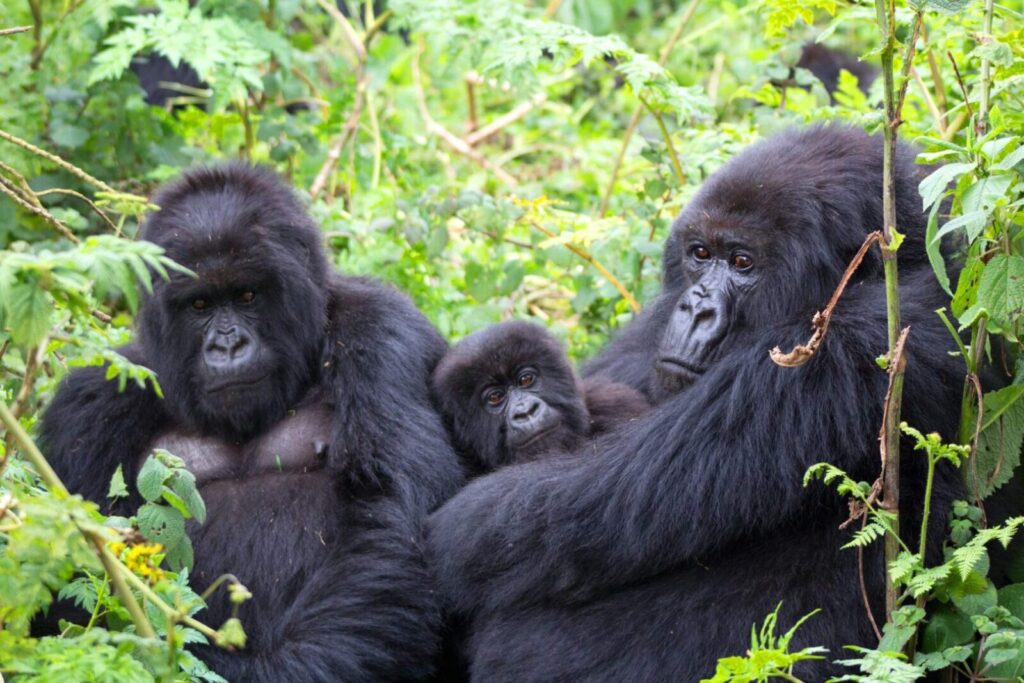
What Is a Gorilla Family?
A gorilla family, also known as a troop, is a closely bonded social unit led by a dominant silverback. The silverback acts as protector, decision-maker, and stabilizing force within the group. Families typically consist of adult females, juveniles, infants, and sometimes subordinate males.
These groups move together through the forest, feeding, resting, and interacting throughout the day. Strong social bonds define daily life, with grooming, play, and communication reinforcing group cohesion. Observing these interactions offers insight into gorilla intelligence and emotional depth.
Role of the Silverback
The silverback is the heart of every gorilla family. His role extends beyond physical protection to include leadership and conflict resolution. He decides where the group feeds, rests, and travels, ensuring safety and stability.
Silverbacks often display calm authority rather than aggression. During trekking encounters, visitors frequently observe the silverback watching quietly from a distance, assessing the situation while remaining composed. This calm presence often leaves a powerful impression on first-time trekkers.
Family Size and Structure
Gorilla family sizes vary depending on age composition and group history. Some families consist of fewer than ten individuals, while others include more than twenty members. Larger families often indicate strong leadership and successful reproduction.
Family structure changes over time. Young males may leave to form their own groups, while new infants are born regularly. These changes reflect natural life cycles rather than instability, highlighting the dynamic nature of gorilla society.
Habituated Gorilla Families
Only habituated gorilla families are available for trekking. Habituation is a long-term process that gradually accustoms gorillas to human presence without altering their natural behavior. This process can take several years and requires daily monitoring by conservation teams.
Habituated gorillas tolerate humans calmly for short periods, allowing safe observation. This careful balance ensures that trekking does not disrupt gorilla life while still offering meaningful encounters for visitors.
Daily Movement of Gorilla Families
Gorilla families do not remain in fixed locations. They move daily in search of food and suitable resting spots. This movement determines trekking routes and difficulty on any given day.
Trackers locate each family early in the morning and communicate their position to rangers guiding visitors. This system ensures accurate tracking while minimizing time spent searching blindly through the forest.
Personality Differences Between Families
Each gorilla family develops its own behavioral patterns and temperament. Some groups are more playful, with frequent juvenile interaction, while others appear calmer and more reserved. These personality differences often reflect group composition and leadership style.
Visitors may observe playful youngsters, protective mothers, or vigilant silverbacks depending on the family encountered. These variations ensure that no two trekking experiences feel the same.
Interaction Dynamics Within Families
Gorilla families communicate through vocalizations, gestures, and physical contact. Grooming reinforces social bonds, while play helps young gorillas develop strength and coordination.
Observing these interactions offers insight into gorilla intelligence and emotional awareness. Visitors often notice behaviors that feel strikingly familiar, reinforcing the deep connection between humans and gorillas.
How Visitors Are Assigned to Gorilla Families
Visitors are assigned to gorilla families on trekking morning based on availability, fitness levels, and current gorilla locations. This system protects visitors from overly strenuous treks while distributing tourism pressure evenly.
Assignments are not influenced by popularity or size of families. Every habituated family offers a meaningful and authentic experience, regardless of composition.
Conservation Importance of Gorilla Families
Protecting individual gorilla families strengthens the entire mountain gorilla population. Monitoring family health, reproduction, and movement helps conservation teams respond quickly to threats or illness.
Gorilla families act as indicators of ecosystem health. Their stability reflects successful conservation strategies and community support, making them central to Rwanda’s wildlife protection model.
Emotional Connection for Visitors
Meeting a gorilla family often creates a strong emotional response. Watching family bonds unfold in silence leaves many visitors feeling humbled and reflective.
This emotional connection reinforces conservation awareness. Visitors leave with a deeper understanding of why protecting gorilla families matters and how tourism supports that mission.
Why Every Gorilla Family Encounter Is Unique
Because families differ in size, personality, and daily behavior, no two gorilla treks feel identical. Even repeat visitors encounter new dynamics and interactions.
This uniqueness keeps gorilla trekking endlessly compelling. Each family offers its own story, making every trek a distinct experience rather than a repeated activity.
Plan Your Safari
Understanding gorilla families in Volcanoes National Park adds depth and meaning to the trekking experience. These families represent resilience, connection, and successful conservation. By observing them respectfully, visitors become part of a system that protects one of the world’s most extraordinary species for generations to come.