Best Time to Visit Kenya for Safari: Month-by-Month Guide
Kenya offers rewarding safari experiences throughout the year, but conditions change from month to month. Rainfall patterns, wildlife movements, vegetation, and visitor numbers all influence what you will see and how you will travel. Understanding these monthly differences helps you choose the right time based on your priorities, whether that means peak wildlife action, fewer crowds, photography, or better value.
This guide breaks down the best time to visit Kenya for safari, month by month, with clear explanations of what to expect.
January: Dry Weather and Excellent Visibility
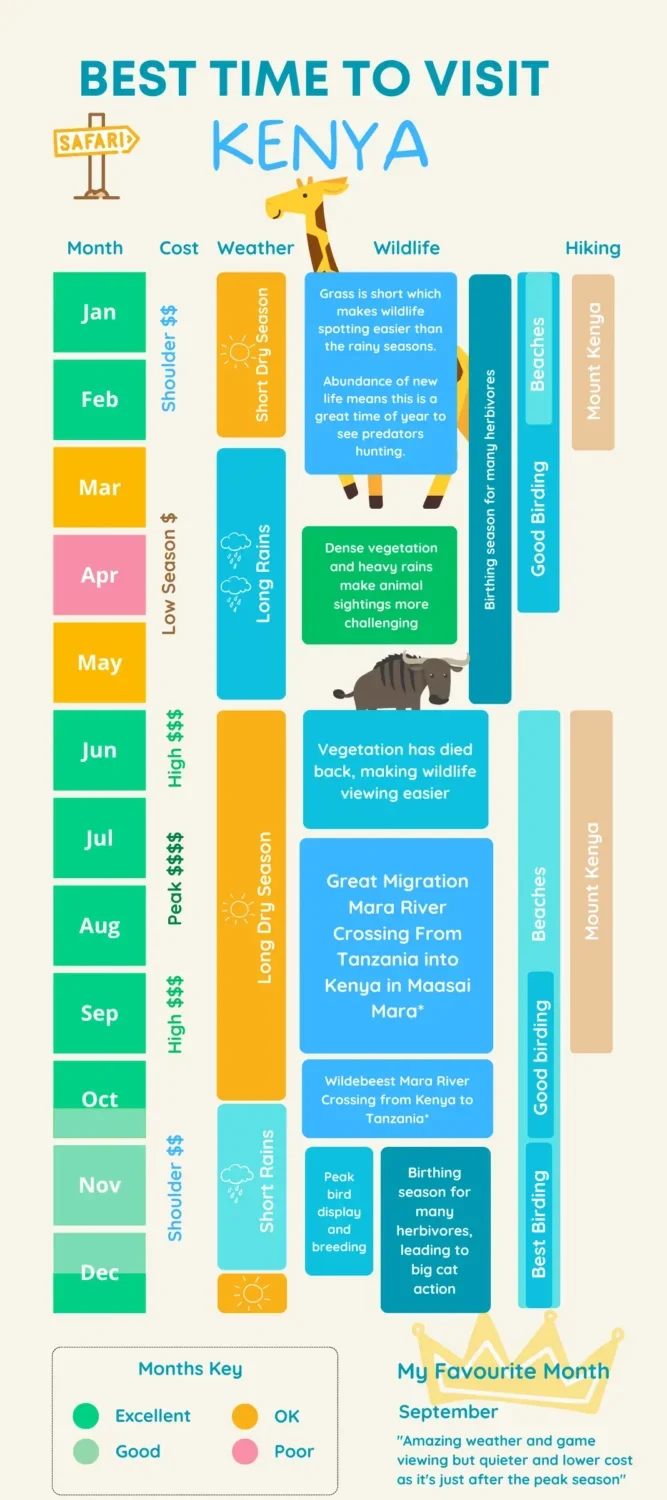
January sits firmly within Kenya’s short dry season. Vegetation remains low, water sources attract wildlife, and game viewing stays strong across major parks. Conditions suit travelers who want clear skies and comfortable temperatures. Photographers appreciate the light, especially in open areas such as Maasai Mara National Reserve and Amboseli National Park. Crowds are moderate, making this a balanced month for safari travel.
February: Hot Days and Predator Activity
February continues the dry trend, with slightly warmer temperatures. Wildlife concentrates near permanent water, which improves sightings of predators and large herbivores. This month works well for travelers focused on big cats, as prey visibility remains high. Northern reserves and savannah parks deliver consistent game viewing before the seasonal shift begins.
March: Transition Toward the Long Rains
March marks the transition period as humidity rises and clouds build. Early March often still offers good safari conditions, while later weeks may see the first heavy showers. Wildlife remains present, but road conditions can start to deteriorate in some areas. Prices often begin to soften, making this month attractive for flexible travelers.
April: Peak of the Long Rainy Season
April is the wettest month in most parts of Kenya. Heavy rains transform the landscape into lush green plains, rivers swell, and fewer visitors arrive. Wildlife does not disappear, but sightings may require patience due to thicker vegetation. This month suits experienced safari travelers, photographers seeking dramatic scenery, and those looking for lower lodge rates.
May: Green Landscapes and Fewer Visitors
Rainfall continues into May but gradually eases toward the end of the month. The countryside remains vibrant and fresh, and wildlife thrives on abundant grazing. Safari traffic stays low, which creates a quieter, more exclusive atmosphere. Parks such as Tsavo National Park feel especially wild during this period.
June: Start of the Prime Safari Season
June signals the return of dry conditions and marks the beginning of Kenya’s peak safari season. Vegetation thins, roads improve, and wildlife becomes easier to spot. Migratory herds start moving north, and anticipation builds in the Maasai Mara. This month offers excellent value before peak-season prices fully set in.
July: Arrival of the Great Migration
July is one of the most popular months for safari in Kenya. The Great Wildebeest Migration enters the Maasai Mara, bringing massive herds and intense predator action. Wildlife viewing reaches exceptional levels, but visitor numbers also rise. Early booking becomes essential, especially for lodges near migration routes.
August: Peak Wildlife Action and High Demand
August delivers some of the best safari conditions of the year. Dry weather, open landscapes, and constant animal movement define this month. River crossings often occur, creating dramatic wildlife scenes. While crowds are higher, the quality of sightings justifies the demand. This period suits travelers seeking classic safari drama.
September: Continued Migration and Stable Weather
September maintains strong safari conditions with slightly fewer visitors than August. Wildlife remains abundant, and the migration continues across the Maasai Mara. Temperatures stay comfortable, and the dry environment supports consistent game viewing throughout the day.
October: Calm Before the Short Rains
October acts as a transition month. Wildlife viewing remains excellent, especially in open parks, while crowds begin to thin. The migration slowly moves south, but resident wildlife still provides rewarding encounters. This month suits travelers who want strong game viewing without peak-season pressure.
November: Short Rains and Renewed Landscapes
Short rains arrive in November, usually in brief afternoon showers. The landscape refreshes quickly, and wildlife spreads out. Birdlife becomes particularly active, attracting migratory species. Safari prices often drop, and the atmosphere feels relaxed. This month works well for photographers and travelers seeking value.
December: Festive Season and Mixed Conditions
December combines holiday travel with improving weather. Early December may still see occasional rain, while later weeks tend to dry out. Wildlife viewing remains good, especially in well-established parks. Festive demand increases prices toward the end of the month, but the safari experience stays rewarding.
Choosing the Right Month for Your Safari
The best time to visit Kenya depends on your goals. Wildlife enthusiasts often favor July to October, while photographers and budget-conscious travelers may prefer the green seasons. Kenya’s diverse ecosystems ensure meaningful safari experiences in every month when planned correctly.