Kenya Safari Packing List: What to Wear & What to Leave Behind
Packing for a Kenya safari is about balance. You need to stay comfortable in changing weather, remain practical during game drives, and travel light enough to move easily between destinations. Many first-time safari travelers overpack or bring the wrong items, which adds inconvenience rather than comfort. A well-thought-out packing list keeps you focused on wildlife and the experience, not on managing excess luggage.
This guide explains what to wear, what to bring, and what to leave behind when packing for a safari in Kenya.
Understanding Safari Conditions in Kenya
Kenya’s safari days usually start early and end around sunset. Mornings can feel cool, especially in parks like the Maasai Mara National Reserve, while midday temperatures rise quickly. Evenings cool down again, particularly at higher elevations such as Amboseli National Park and the Rift Valley.
Most time is spent in a safari vehicle, but dust, sun exposure, and temperature changes shape what you should wear.
What to Wear on a Kenya Safari
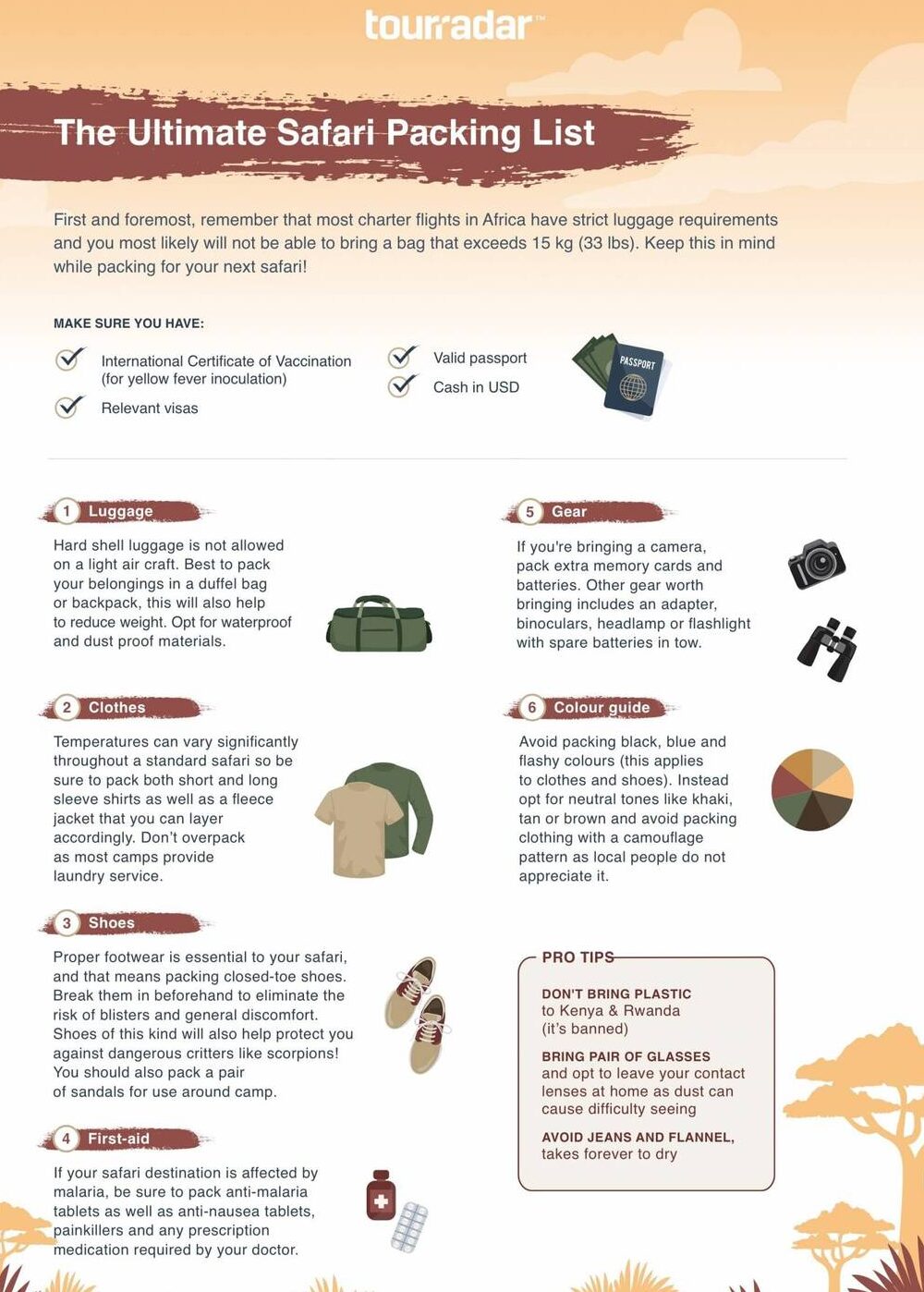
Neutral, breathable clothing works best on safari. Earth tones such as khaki, olive, beige, and brown blend naturally with the environment and help reduce insect attraction. Lightweight long-sleeved shirts protect your arms from sun and dust while keeping you cool.
Comfortable trousers or zip-off pants suit long hours in the vehicle. Shorts work well during midday heat, especially in dry regions. A fleece or light jacket becomes essential for early morning game drives when temperatures drop.
Footwear should prioritize comfort rather than style. Closed walking shoes or lightweight hiking shoes handle lodge grounds, picnic stops, and short walks. Sandals work well for evenings at camp but should stay sturdy rather than delicate.
A wide-brimmed hat and sunglasses protect against strong equatorial sun, especially during open-roof game drives.
Clothing You Do Not Need
Heavy jackets, formal wear, and bright-colored clothing have no place on safari. Camouflage clothing is discouraged in many African countries and should be avoided entirely. High heels and stiff shoes only add weight without serving any practical purpose.
Expensive jewelry and accessories increase risk and distraction. Safari lodges favor a relaxed atmosphere, even at luxury properties.
Essential Safari Gear to Pack
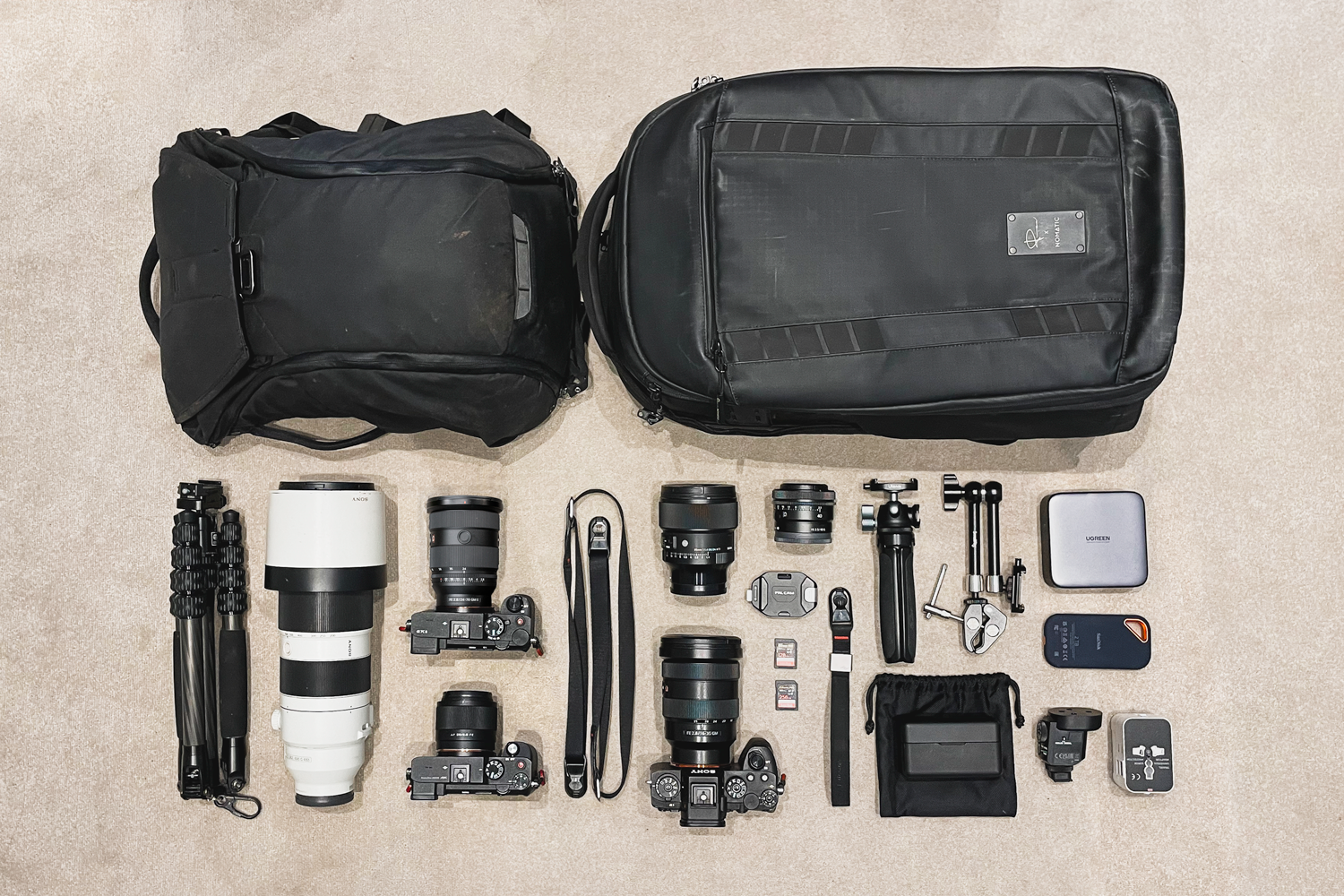
Binoculars enhance wildlife viewing, even when animals appear close to the road. A camera with a zoom lens allows you to capture detail without disturbing wildlife. Spare batteries and memory cards matter more than extra camera bodies.
A small daypack keeps essentials accessible during game drives. Sunscreen, lip balm, insect repellent, and personal medication should stay within easy reach. A reusable water bottle helps you stay hydrated throughout the day.
Power banks and universal travel adapters support cameras and phones, especially in remote areas with limited charging hours.
Luggage Choice Matters More Than You Think
Soft-sided bags work best for Kenya safaris. They fit easily into safari vehicles and small aircraft, especially on fly-in routes to remote parks. Hard suitcases create storage problems and may be restricted on internal flights.
Keeping luggage compact improves mobility and comfort at every stage of your journey.
Health and Personal Items
Bring basic first-aid supplies, including pain relief, motion sickness tablets, and any prescribed medication. Anti-malarial medication depends on your doctor’s advice and travel route.
Wet wipes and hand sanitizer prove useful during long drives and picnic stops. Toiletries should remain minimal, as most lodges provide essentials.
What to Leave Behind
Hair dryers, heavy electronics, and unnecessary gadgets add weight without benefit. Wildlife encounters do not require drones, which are restricted in Kenyan national parks. Large backpacks and oversized handbags become inconvenient during game drives.
Leave behind excessive clothing options. Safari life values simplicity, and most lodges offer laundry services, even in remote areas.
Packing Tips for Different Safari Styles
Road safaris allow slightly more flexibility with luggage size, while fly-in safaris enforce strict weight limits. Family safaris benefit from shared packing of essentials such as sunscreen and first-aid supplies.
Photography-focused travelers should prioritize lenses and accessories over clothing variety.
Final Packing Advice
A Kenya safari rewards practical packing. Light layers, neutral colors, and essential gear cover nearly every situation. When in doubt, pack less rather than more. Comfort, mobility, and readiness matter far more than fashion.