Canopy Walk Experience in Nyungwe Forest
The canopy walk experience in Nyungwe Forest offers one of Rwanda’s most unique and visually striking nature encounters. Suspended high above the rainforest floor, the canopy walkway allows visitors to observe Nyungwe’s ancient forest from an entirely different perspective. Rather than moving through dense undergrowth, travelers step into the treetops, surrounded by mist, birdsong, and sweeping forest views.
This experience complements primate trekking by revealing the upper layers of the rainforest ecosystem. It is less physically demanding than chimpanzee trekking but equally immersive, making it ideal for travelers seeking adventure, scenery, and ecological insight without intense hiking.
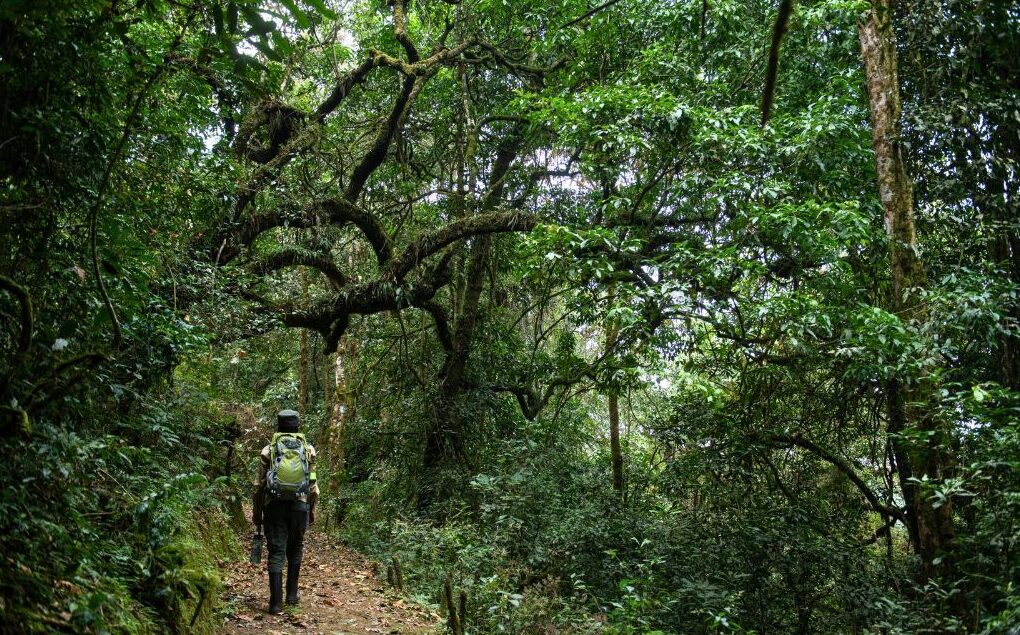
What Is the Nyungwe Canopy Walk
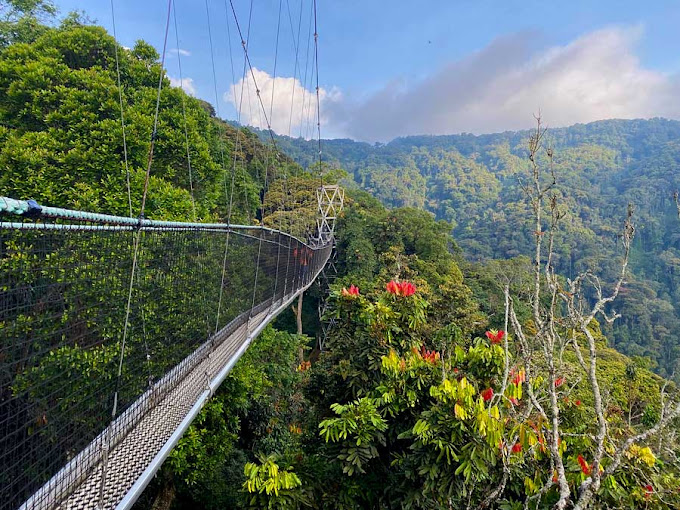
The Nyungwe canopy walk is a suspended bridge system stretching across a deep forest valley within Nyungwe Forest National Park. Positioned high above the ground, the walkway offers panoramic views of the rainforest canopy and surrounding hills.
The structure is designed for safety and stability, allowing visitors to walk confidently while enjoying uninterrupted views. It creates a rare opportunity to experience the forest from a level usually accessible only to birds and arboreal animals.
Location and Setting
The canopy walk is located in the Uwinka area of Nyungwe Forest National Park, one of the park’s most accessible and scenic zones. The surrounding forest is dense, ancient, and rich in biodiversity, providing an ideal backdrop for elevated exploration.
From this vantage point, visitors can see layers of vegetation stretching across valleys and ridges. On clear days, distant hills and cloud formations add to the dramatic scenery, while misty conditions create an atmospheric, almost surreal experience.
The Canopy Walk Experience
The experience begins with a guided forest walk leading to the canopy bridge. This approach hike allows visitors to acclimate to the forest environment and observe plant life and wildlife at ground level.
Once on the bridge, the sensation changes dramatically. The gentle sway of the walkway, combined with the height and openness, creates a sense of adventure. Visitors move slowly, pausing to take in views, listen to forest sounds, and observe movement in the canopy.
Wildlife and Birdlife Observation
The canopy walk offers excellent opportunities to spot bird species that inhabit the upper forest layers. Nyungwe Forest is home to many endemic and rare birds, some of which are easier to see from canopy level.
While primates may occasionally be visible from the bridge, sightings are not guaranteed. The experience focuses more on ecosystem observation than close wildlife encounters, emphasizing atmosphere and perspective rather than proximity.
Physical Difficulty and Accessibility
The canopy walk is moderately easy and accessible to most travelers. The approach hike is gentle compared to chimpanzee trekking, and the walkway itself requires no technical skill.
Travelers with a moderate fear of heights may feel challenged at first, but the structure is stable and guided by professionals. Many visitors find that initial hesitation quickly gives way to enjoyment and confidence.
Safety Measures and Construction
Safety is a core component of the canopy walk design. The bridge is constructed with strong materials, safety railings, and weight limits that ensure stability. Guides accompany visitors and provide clear instructions throughout the experience.
Regular inspections and maintenance ensure long-term safety. These measures allow visitors to focus on the experience without concern, even at significant heights.
Best Time to Do the Canopy Walk
The canopy walk is available year-round. Dry seasons offer clearer views and easier approach trails, making them popular with first-time visitors. Reduced rainfall improves visibility across valleys and forest layers.
Rainy seasons create a dramatic atmosphere with mist and deep green foliage. While views may be partially obscured at times, the forest feels alive with sound and movement, appealing to travelers who enjoy mood and immersion.
Photography Opportunities
Photography from the canopy walk is highly rewarding. Elevated angles allow for wide forest landscapes, textured canopy patterns, and atmospheric light conditions.
Photographers benefit from steady footing and time to compose shots. Mist, clouds, and shifting light often create dramatic scenes unique to this experience.
How the Canopy Walk Complements Primate Trekking
The canopy walk provides ecological context to primate experiences. While chimpanzee and monkey trekking focus on individual species, the canopy walk reveals the forest structure that supports them.
Combining both activities deepens understanding of Nyungwe’s ecosystem. Visitors gain insight into how primates, birds, and plants interact across vertical forest layers.
Who the Canopy Walk Is Best For
The canopy walk suits travelers seeking scenic adventure, light physical activity, and unique viewpoints. It appeals to photographers, nature lovers, families with older children, and travelers wanting a less strenuous forest experience.
Those expecting close wildlife encounters may need adjusted expectations. The value lies in perspective, atmosphere, and immersion rather than guaranteed animal sightings.
Environmental and Conservation Significance
The canopy walk promotes low-impact tourism by concentrating visitor movement along a controlled structure. This approach reduces pressure on sensitive forest areas while still allowing meaningful access.
Tourism revenue supports conservation and park management, reinforcing Nyungwe’s protection. The experience highlights how responsible infrastructure can coexist with environmental preservation.
Plan Your Safari
The canopy walk experience in Nyungwe Forest offers a rare chance to explore Rwanda’s rainforest from above. Through sweeping views, rich atmosphere, and gentle adventure, visitors connect with the forest in a unique and memorable way. When combined with primate trekking, the canopy walk completes a deeper understanding of Nyungwe’s extraordinary ecosystem.